
Comprehensive Eye Examination
(1) history;
(2) visual acuities near, intermediate and distant vision (uncorrected and with best optical correction if needed);
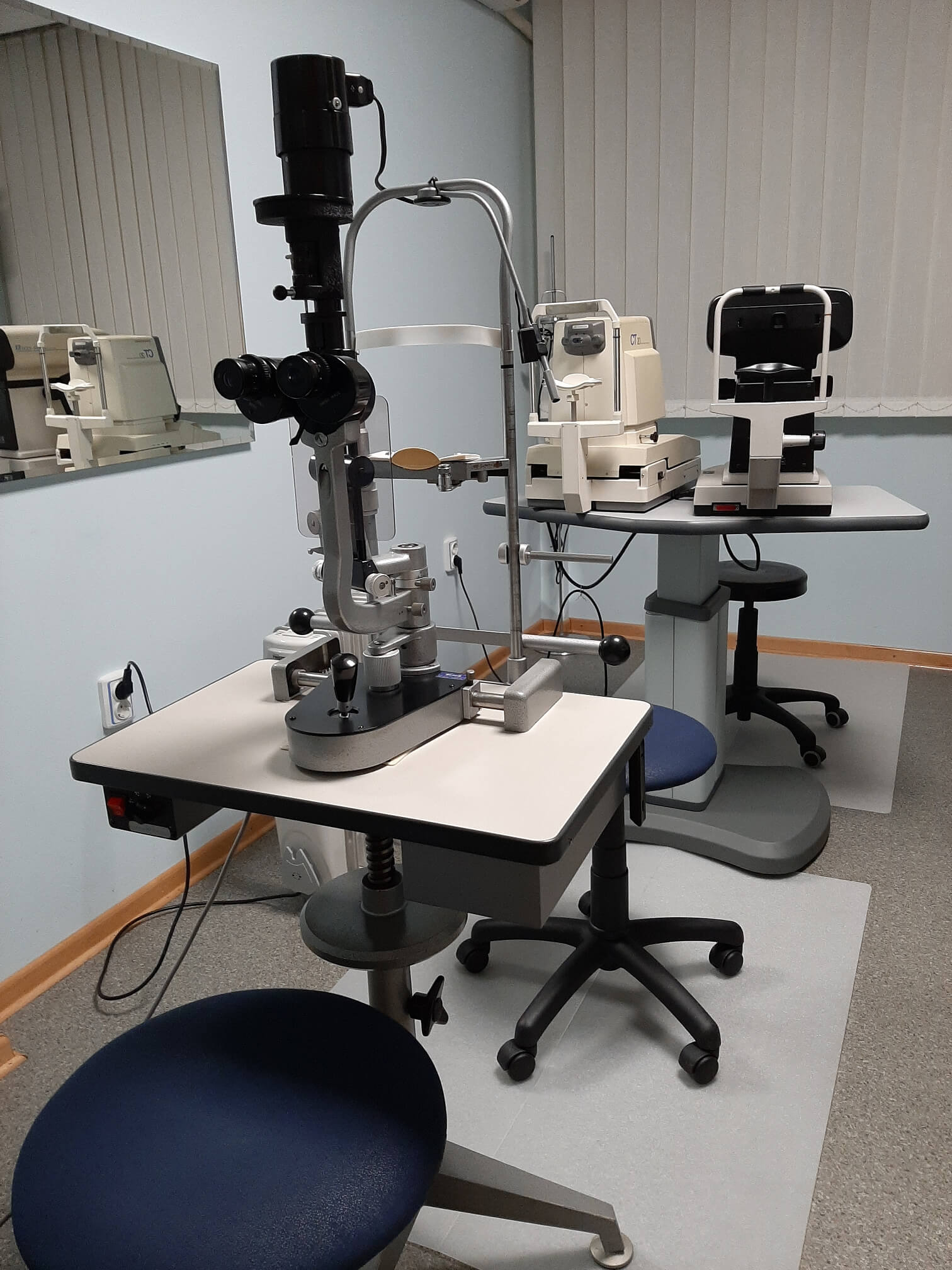
(3) examination of the external eye, media (slit lamp) and fundoscopy;
(4) ocular motility;
(5) binocular vision;
(6) visual fields;
(7) measurement of intraocular pressure (non-contact tonometry);
(8) objective refraction in cycloplegia (as needed);
(9) assessment of mesopic contrast sensitivity; and
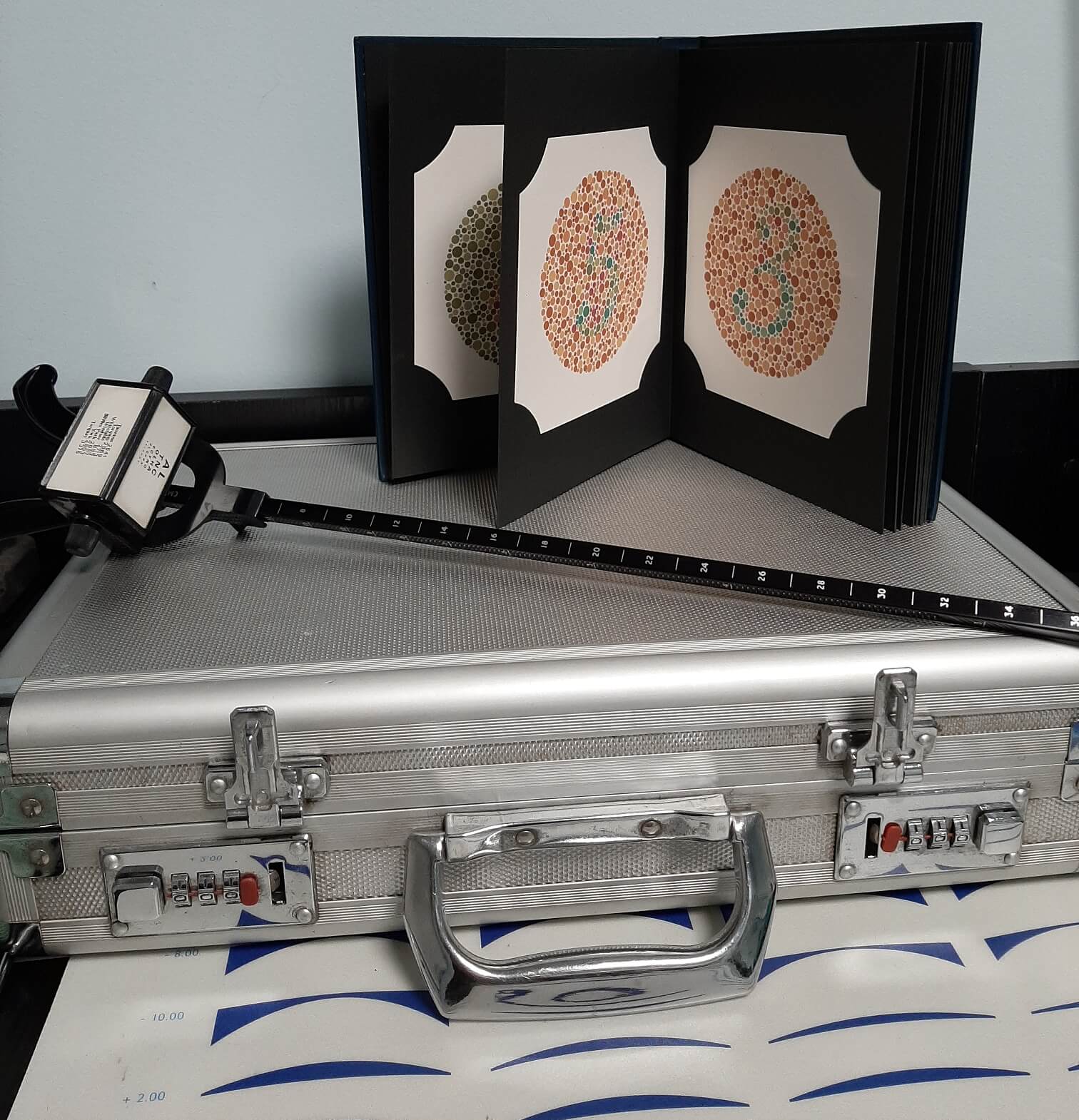
(10) colour vision.

Examination To Determine Glasses
(1) computerized assessment of approximate dioptre (refractive error) by autorefractometer;
(2) examination visual acuities near, intermediate and distant vision (uncorrected and with best optical correction);
(3) examination of the external eye, media (slit lamp);
(4) measurement of intraocular pressure (non-contact tonometry;
(5) fundoscopy and objective refraction in cycloplegia (as needed);
(6) recommendations for the appropriate type of prescription glasses;
(7) prescription for glasses.

Examination For Determining Contact Lenses
(1) computerized assessment of approximate dioptre (refractive error) by autorefractometer;
(2) determining the best type of contact lens;
(3) examination visual acuities near, intermediate and distant vision (uncorrected and with best optical correction);
(4) placement of trial lenses;
(5) examination of the external eye, media (slit lamp);
(6) measurement of intraocular pressure (non-contact tonometry);
(7) ) fundoscopy and objective refraction in cycloplegia (as needed);
(8) prescriptions for contact lenses;
(9) training to wear contact lenses.